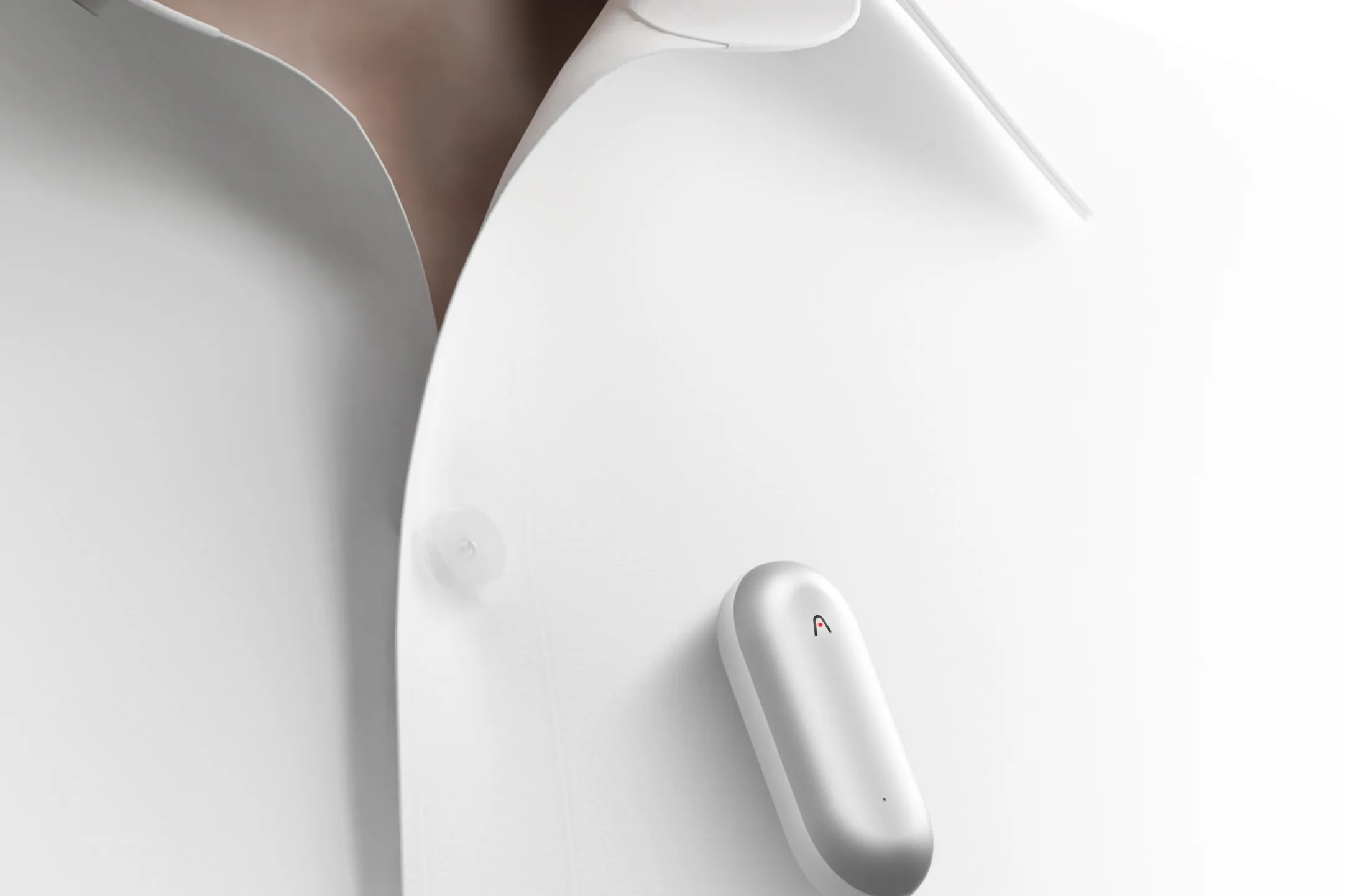
There was a time when voice recorders were indispensable for journalists, students, and professionals who needed to capture conversations. With the rise of smartphones, they were pushed aside, relegated to a dusty drawer. But today, artificial intelligence is bringing them back into the spotlight. Compact, connected devices now offer automatic transcriptions and meeting summaries in seconds. What once seemed like a dead product category is regaining attention from users and manufacturers, fueled by AI-driven innovation.
Plaud and the Reinvention of a Classic
San Francisco- and Shenzhen-based startup Plaud has found a way to reinvent the classic voice recorder with AI. Its flagship device, NotePin, shaped like a USB stick, records conversations and instantly converts them into organized transcripts and summaries. Linked to a companion app, it allows users to search recordings and even ask questions about their content. By combining minimalist hardware with smart software, Plaud differentiates itself from the basic recording functions already offered by smartphones.
From niche gadget to profitable business, Plaud has proven the model works. Since its 2023 launch, the company has sold over one million devices, according to Forbes. Its strategy combines hardware and subscription: NotePin sells for €169.90, while the Note and Note Pro models reach €169.90 and €189, respectively. Thanks to this mix, Plaud projects $250 million in annualized revenue with margins close to 25%—on par with Apple’s iPhone business.
A Hot Market for AI Hardware
Plaud isn’t alone in chasing this revival. AI-powered hardware is booming, attracting over $350 million in recent investment, Forbes reports. Amazon joined the movement by acquiring Bee, a startup focused on compact recorders for executives. The idea of carrying an always-available assistant is appealing, though the results have been mixed.
Rabbit’s R1 promised a revolution in AI interaction, but users quickly discovered it functioned much like a regular mobile app. Humane’s AI Pin, a futuristic attempt to replace smartphones, ended as a costly disappointment. In contrast, Plaud has succeeded by staying grounded: focusing on productivity—recording, transcribing, and organizing information—without overpromising.
China Joins the Race
China is also pushing forward in this category. According to the South China Morning Post, DingTalk, Alibaba’s workplace collaboration platform, unveiled the A1 recorder in August. Compact and AI-powered, it transcribes, summarizes, and translates conversations into more than 100 languages. Backed by Tongyi AI, trained on 100 million hours of audio, it specializes in the jargon of over 200 industries. Priced from 499 yuan (about €60), it is a more affordable alternative to Plaud’s Note Pro, though it remains limited to the Chinese market.
Why Not Just Use a Smartphone?
The obvious question is: if smartphones can record, why carry another device? Plaud’s answer lies in specialization. Its recorders feature dedicated microphones and extended battery life, ideal for long interviews or back-to-back meetings. The companion app offers tailored templates for doctors, lawyers, and sales teams, streamlining workflows. This focus turns the NotePin into more than a recorder—it becomes a professional note-taking companion.
Business Model and Ethical Questions
Plaud’s business relies on a hybrid of devices and subscriptions. The free plan offers limited features, while Pro (€110.99/year) unlocks 1,200 minutes of transcription per month with advanced templates and summaries. The Unlimited plan (€249.99/year) allows continuous recording and transcription with full platform access.
Still, the presence of always-on microphones raises privacy and ethical questions. Co-founder Nathan Xu insists the device is designed for professional use, not surveillance. To reinforce that, NotePin includes a visible recording light. In the U.S., states like California require consent for recordings, with penalties for violations—even if enforcement is inconsistent.
Between Shenzhen and San Francisco
Although Plaud was born in Shenzhen, Xu has worked to strengthen its American identity. The company is registered in Delaware, with headquarters in San Francisco, and states that all user data is stored on servers in the U.S. This positioning aims to reassure users amid ongoing U.S.-China tensions over privacy and technology.
The Road Ahead
The future of AI-powered recorders will depend on precision, trust, and industry adoption. Plaud is already expanding into healthcare, having acquired a hospital software startup to compete with players like Abridge and Microsoft-owned Nuance. In regulated markets where accuracy and security are paramount, specialized companies may have an edge.
Voice recorders are no longer a relic of the past. Plaud has shown that users are willing to pay for tools that save time and increase efficiency, even in a smartphone-dominated world. With rivals like Alibaba entering the race, competition is heating up. Whether these devices evolve into a lasting category or simply a bridge to future smartphone features remains to be seen. What is certain is that capturing and processing information has never had more potential.